Himāra — The Valley of Five Elements
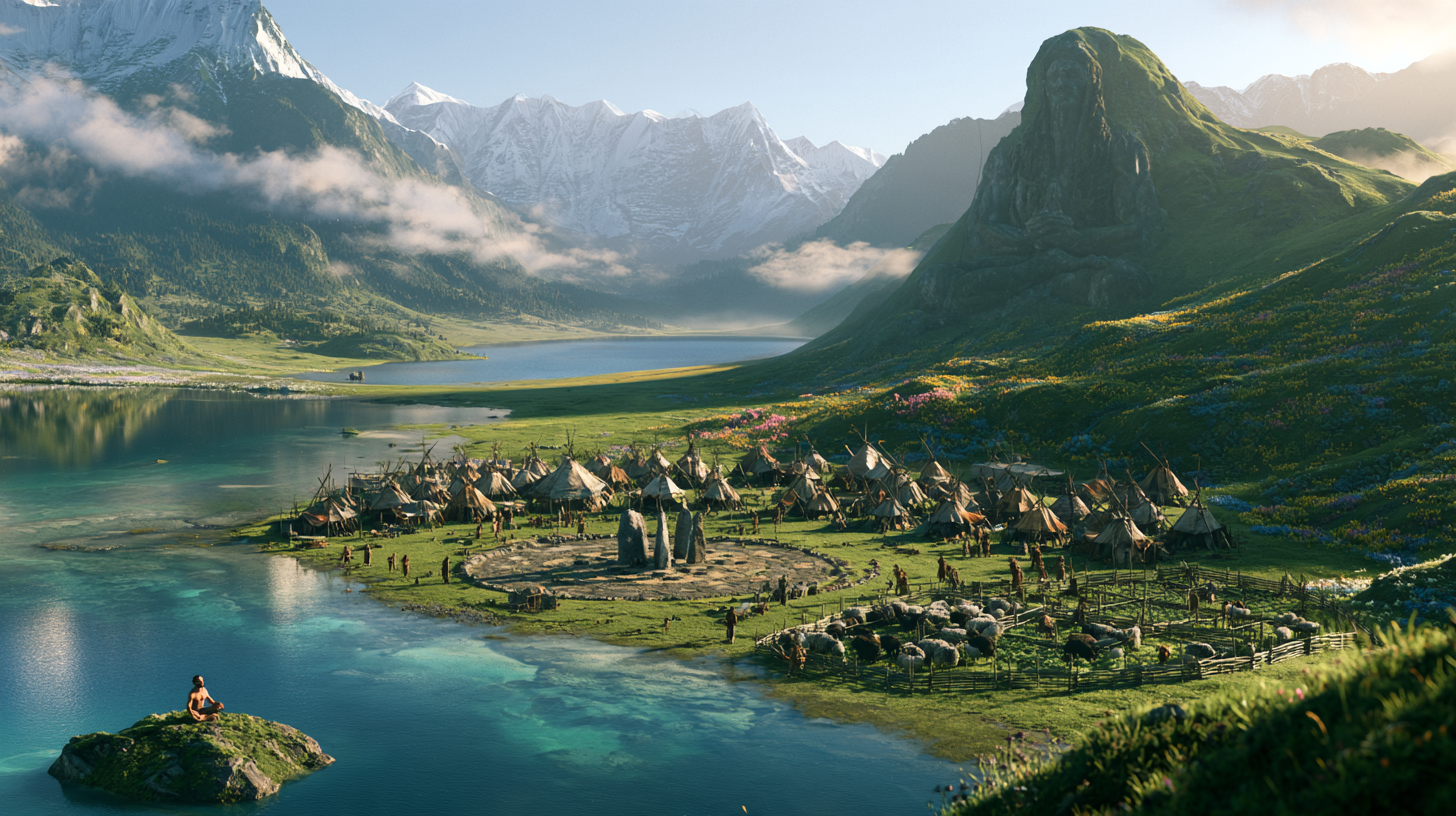
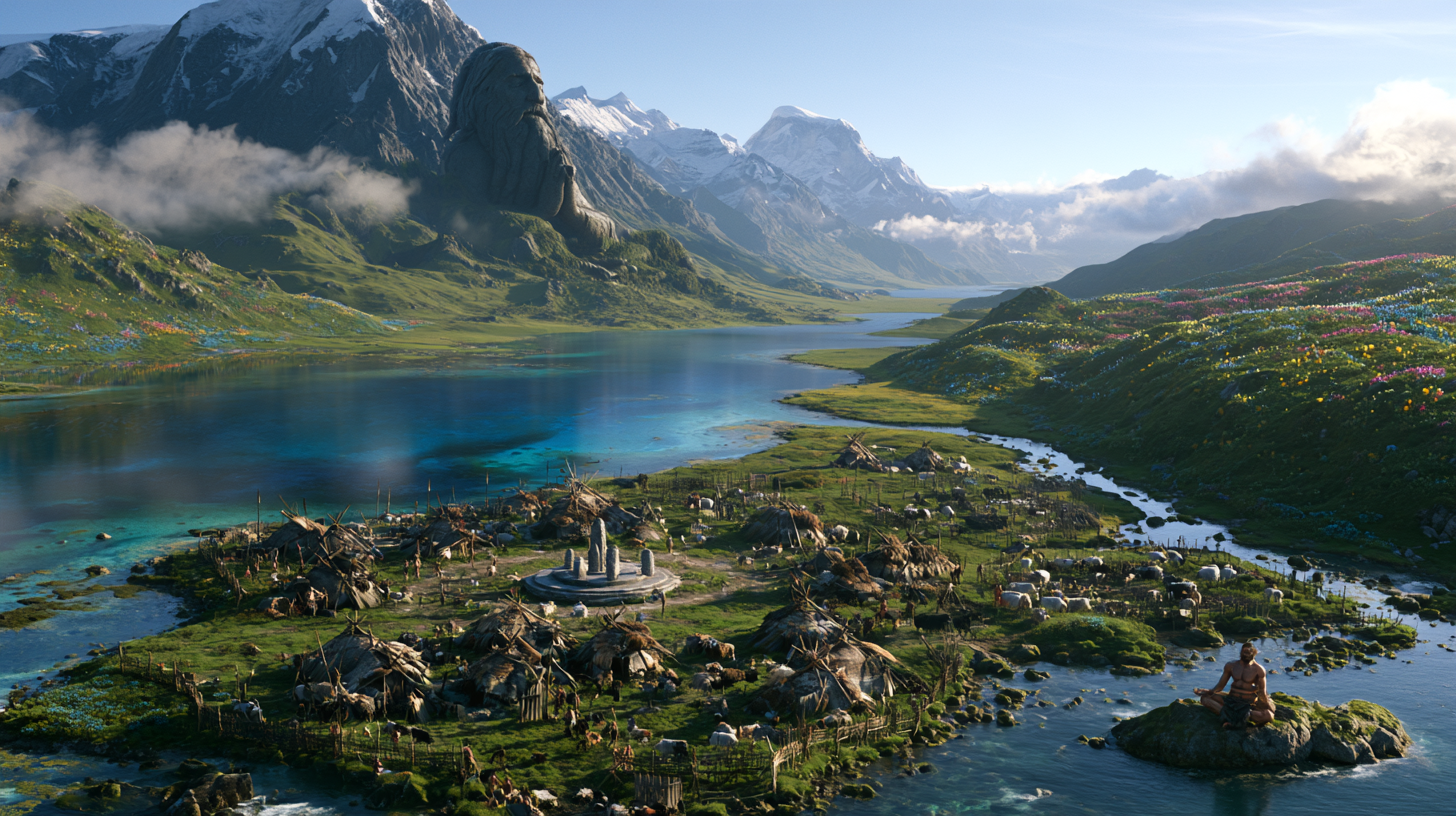
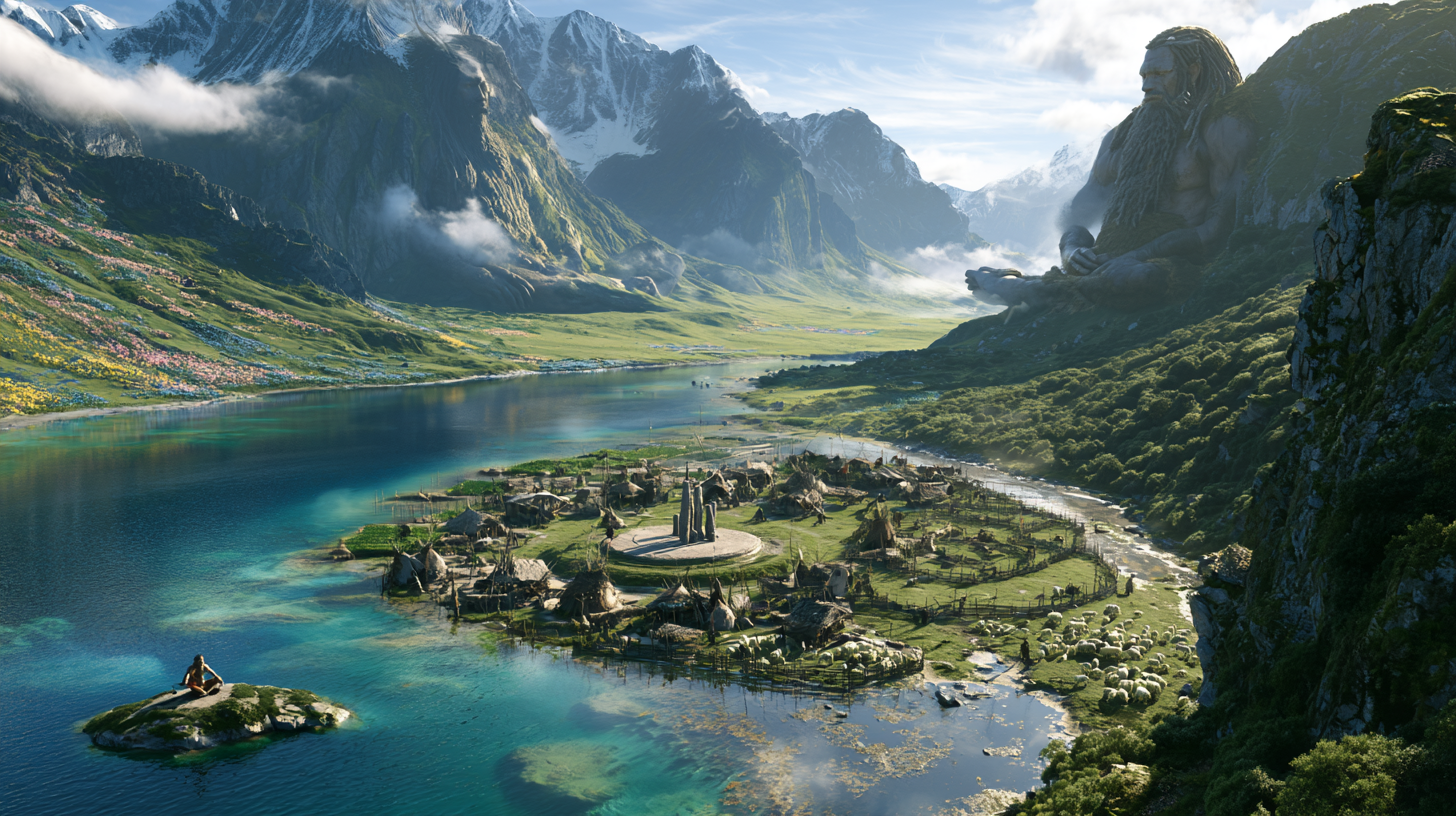
In an imagined Himalayan world around 10,000 BCE, a shepherd settlement flourishes beside a crystal-blue lake, surrounded by snow-capped mountains, wildflower slopes and drifting morning clouds. A peak resembling a meditating saint watches over towering inhabitants who live in animal-hide tents, tend sheep and yaks, and cultivate small vegetable plots. At the settlement’s heart, five sacred stones representing nature’s elements anchor a communal space for worship, prayer and meditation. Just offshore, a solitary man meditates upon a rock, embodying the harmony between the community, its spiritual traditions and the landscape.
Set in an imagined Himalayan world around 10,000 BCE, this settlement rests beside a crystal-blue lake beneath snow-capped mountains. Morning sunlight washes over green slopes scattered with pink, yellow and blue wildflowers, while low clouds drift through the valleys. Above it all, a mountain resembling a meditating saint lends the landscape a quiet, sacred presence.
Animal-hide tents line the riverbanks, home to towering shepherds dressed in hides and fur, with long braided or dreadlocked hair. Carrying wooden staffs and brass weapons, they tend sheep and yaks alongside small vegetable plots. At the settlement’s heart, five stones representing the elements of nature stand upon an open circular platform where the community gathers to worship and meditate. A solitary figure sits on a rock just offshore, reflecting the stillness that connects this world’s people, landscape and spiritual life.
Seen from above, the settlement reveals a gentle rhythm of dwellings, grazing enclosures and cultivated land woven into the mountain terrain. At street level, textured hides, weathered wooden poles and the movement of people and animals bring its daily life into focus. Together, these views portray a community whose shelter, livelihood and rituals are shaped by a deep connection to nature.